

Forgetting your own limitations or the power of the subconscious mind
Forgetting Your Own Limitations – The Power of the Subconscious Mind
In my February blog I mentioned that I was planning a trip to Greenland.
I’d been dreaming about this for many years and I have to say, I’m really not sure where this desire originally came from. But I believe it was based on a romantic idea of the landscape, the culture and the life of the Inuit.
Of course, the dream included admiring Greenland’s certainly impressive snow-covered landscape, including the glaciers, but also very specific plans such as snowmobile tours, hiking on the inland ice, dog sledding and even staying overnight in an original igloo.
No sooner said than done. I had just gone through a challenging time both professionally and personally and rewarded myself with the fulfillment of this dream. A week in Ilulissat. By myself. No travel companion, no tour group. Just me, myself and I.
I started dreaming about this trip to Greenland before I was diagnosed with cancer and before all the treatments and side effects. I was fit as a fiddle, very athletic and felt strong, both physically and mentally. Now, many years later, when I set out planning the trip and all the things I wanted it to include, I was totally excited and started booking the various items on my bucket list one by one. I happily packed all the things and equipment I thought I’d need and set off.
When I arrived in Greenland – all its roads covered in ice and snow, traveling in small, cramped propeller planes, with daytime temperatures sometimes as low as minus 27 degrees Celsius – I quickly realized that I might have been fit as a fiddle many years ago. But today? I immediately reached my physical limits. My backpack felt far too heavy. On my first longer hike, where I was sometimes knee-deep in snow, I had to deal with balance problems due to my polyneuropathy, along with muscle cramps.
The first mental doubts followed: What on earth had possessed me to undertake this crazy journey? How could I have overestimated myself and my strength so much? And to take this trip all by myself?
What was I going to do? How was I going to manage the treks, the weight of my backpack, the snowmobile tour, or the night in an igloo? Should I stay in my room for a week and read books? Had I come all this way for that?
I have no one to blame but myself. You may be thinking that right now. And you’d be right.
So what to do?
Giving up was not an option for me. That was never my way. So I came up with a new strategy:
I broke my goals down into smaller steps. I didn’t look at the whole week at once, but one day at a time, one action at a time. Every completed action went into my personal “I did it” record.
During periods of weakness, I simply stood still. I rested, enjoyed the scenery, talked to locals and other travelers. These pauses helped me recharge and slow down.
I also did something unexpected: I asked strangers for help. And it worked. Effortlessly. Without shame. Instead, it created connection and mutual support.
This made me realize that everyone carries challenges, regardless of age or fitness. Together, complementing each other, we were stronger.
And in the end, I realized something important:
There were moments when I was simply too tired to overthink. I turned off my head and just did it. And it worked. Smoothly.
It occurred to me that maybe my subconscious mind didn’t even know about my limitations.
What if the body doesn’t know what it can’t do? What if it simply performs from memory?
The less attention I paid to my worries, the better things went.
I stopped telling my body what wasn’t possible.
That doesn’t work for everything. But it taught me to trust my intuition and unconscious processes more.
Don’t tell yourself what you can’t do. If your intuition believes it will work, it often will.
So: What is your long overdue dream?
Go for it,
Your Crisis Manager


“Live each day as if it were your last!” – How exactly does that work?
Have you ever heard the saying “Live each day as if it were your last”? I myself often wonder how to do that and what it means in concrete terms. How would your last day feel? Have you ever wondered how that works?
I’ve been officially a palliative care patient for eight years now. People regularly ask me if I’ve changed anything in my life or lifestyle, if I’ve turned it upside down. My answer is always: No, I haven't.
And I'm not even sure if that short answer is true. Factually, I haven’t changed anything. I’m still happily married, I still enjoy my hobbies and interests, and I still do what I do best: crisis and conflict management. The latter still takes up about 80 hours of my week, and I’m completely immersed in it.
I also spend time with friends, gardening, volunteering at the theater, or just being by myself. And I enjoy my life. Just like before. I don’t deny myself anything, and I allow myself a lot. So, I really haven’t changed a thing.
Do I live every day as if it were my last? No, I don’t.
I wouldn’t even know how to do that. If I knew that tomorrow was my last day, I would probably be so overwhelmed by the question of what to do with this gift of limited time that I would remain relatively inactive. I would probably grab a coffee, sit on the sofa and wait. Or quickly fold the laundry? Maybe write some notes to my loved ones? Make a phone call or two? Express my love to my loved ones? Truly, I have no idea.
What do you do on a day like that?
Or is this statement meant in a different way? That maybe I’ve changed something in my life? That maybe it’s not necessarily something factual, but rather my approach to life or my attitude?
For example, I never go to bed angry. I don’t go on a business trip unless everything is “okay” at home. I no longer get upset about things that used to upset or stress me out. Is this what is meant? Or has that just changed because of my age and life experience?
I’ve always been a very active person who lives intensely, tries out lots of things, and who moves forward boldly and positively. So that’s nothing new. But have I become more aware of it?
I can certainly empathize better with other people’s crisis situations. I have a new or expanded awareness. But is awareness a characteristic of my last day? My “new” life? I don’t think so.
Maybe the above saying is easier to say than to think through?
If I have to imagine every day that this could be my last day, that I should enjoy it now... do I really want to be confronted with the finiteness of life on a regular basis? Isn’t it better to just enjoy life and everything that comes with it, including the ups and downs? To surf the waves of my emotions? Or is that exactly what is meant?
Well, if that’s the case, then it’s what I do: I live each day as if it were my last. But this saying still feels strange to me. And I’m convinced that it must have been invented by someone who hasn’t had to deal with the prospect of death in any real way.
Here is one thing that has changed for me: I have become more grateful and humble. Grateful for my parents, my loved ones, my life and my happiness. And humble towards the very same things. And towards life.
Have you ever thought about the saying “Live each day as if it were your last” and wondered how it works? What ideas have you come up with?
I would love to hear from you.
With that in mind,
Go for it, Your Crisis Manager

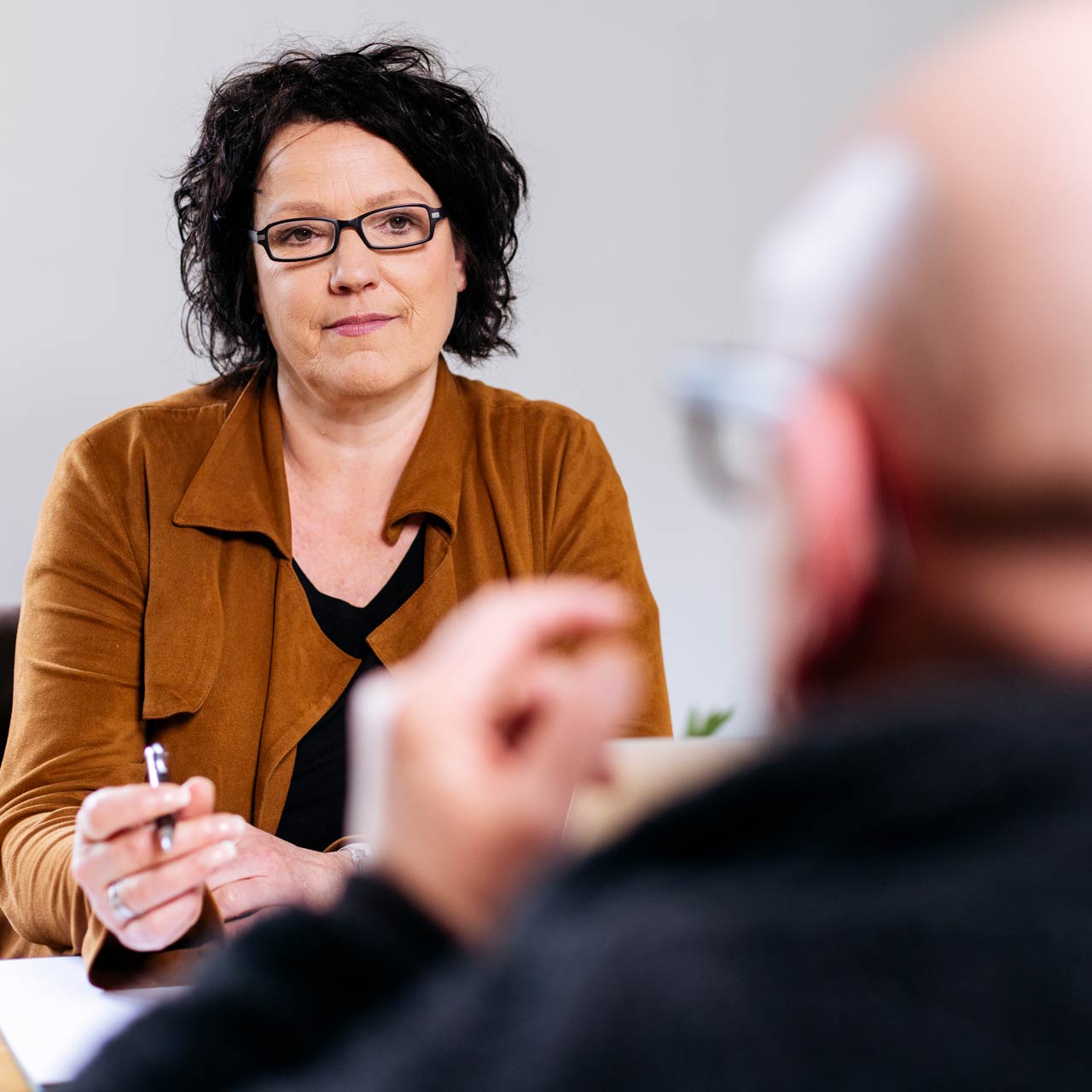
Food for thought: the Active Listening method
Let’s be honest: What was your first thought when you read the title of this blog post? “Active listening? Not again!”, or “What old news!”, or maybe, “I’ve heard this before, and I’ve heard it a million times in various types of training…”?
I’m sure you’ve come across this method in a number of communication training courses. You’ve probably also participated in group exercises on this subject and perhaps found them interesting. But in your personal and professional life, communication problems still occur – perhaps disputes and conflicts are even based on them – and now you’re looking for some additional and, above all, new content and tips on how to avoid them. Is this you?
Well, you’re not alone.
No matter what context I’m working in – be it communication, negotiation or conflict management workshops, mediation, conflict moderation or strategy meetings at the highest hierarchical levels – I always encounter communication problems; and it’s not uncommon for their resolution to be the first step towards resolving the conflict situation to achieve a collaborative result or an even better performance or achievement of a goal.
Do we really need new methods and approaches? Do we really need to reinvent the wheel?
I’m a fan of evolution and simplification when it comes to our interactions. But I also believe that we should start by actually applying in practice the methods we’ve heard so much about in theory.
And that’s where 99% of the situations I encounter in my daily work as a consultant get stuck.
The first step in active listening is listening. You know this, of course, because you’re familiar with the method. But how often do you actually do it? Listening. It’s not just the purely acoustic process of listening that involves acknowledging with eye contact, attention and “social grunts” such as uttering “mmm-hmm” or “yes.” No, this stage goes beyond that.
“Listening” also means focusing our thoughts on the other person. Please reflect honestly on the conversations you have: How often do you really listen to the other person without simultaneously working on an appropriate response, thinking about your next argument, or even wondering about the other person’s behavior, getting annoyed with them or whatever else?
And it’s precisely when we’re thinking about the next step that we fail to do that one key thing: listen.
Because of this, we miss specific statements, nuances, and most importantly, significant elements of the other person’s level of need – which may require us to ask more questions, clarify certain aspects or pick up important information – that makes clear, collaborative and misunderstanding-free communication possible in the first place.
Listening attentively can be tiring and requires our full concentration. As a result, we don’t always succeed at it. But if we’re aware of this communication deficit of ours, we can use the “active listening” method in a targeted manner in certain situations. The results may surprise you. Active listening may be “old hat” for you in theory, but in practice it can be a fresh, new step on your journey towards great communication.
I look forward to hearing your feedback and experiences.
Until then,
Go for it,
Your Crisis Manager